More images
Details:
 |
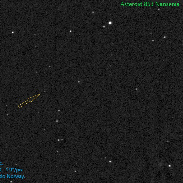
It has a diameter of ca. 27km making it larger than 99% of the known asteroids.
It is classified as a C-type (carbonaceous) asteroid, meaning it has a very dark
surface with a low geometric albedo of approximately 0.05.
Spectral data indicates that it likely contains a mixture of carbon compounds,
water ice, iron, nickel, cobalt, nitrogen and ammonia.
https://en.wikipedia.org/wiki/853_Nansenia
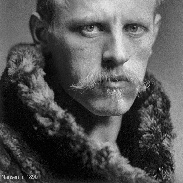
It is named after the Norwegian
polar explorer and Nobel Peace Prize laureate Fridtjof Nansen (1861–1930).
https://en.wikipedia.org/wiki/Fridtjof_Nansen
It was discovered at the Simeis Observatory in the Crimea 1916-04-02 by Sergej Ivanovich Beljavskij
( 1883 - 1953 ).
He was a Soviet/Russian astronomer and
member of the Soviet Academy of Sciences.
He discovered 36 asteroids, three of which was together with his compatriot Nikolaj Ivanov.
On September 29 1911 he discovered the comet C/1911 S3
Some nearby stars reveal themselves by their proper motion over a period of time from
approximately 1955 to the present day.
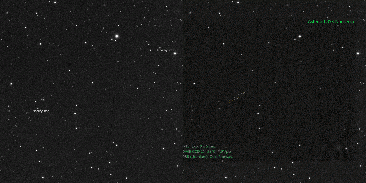
Sun distance (au): 5.40 Perihel : 2027 Jun.8 Sun distance : 5,33
Time: 23:56UT 2026-09-15 Exp. 8 x 5 sec.
Tel. 0.254m f/5.9 ST-10XME CCD @ -25°C 1.9"/pix
Odd Trondal Obs.code 238 (Uranium). Oslo Norway.
Software used:TheSky6,CCDSoft 5, MSB Astroart 2.0, 8.0, Paint
|
Photographer's website:
https://www.flickr.com/photos/odd_trondal/
|